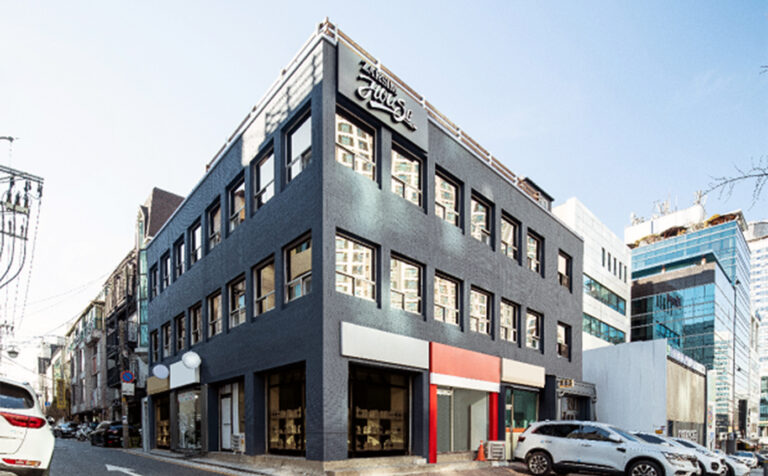
According to Article 2, Paragraph 7-2 of the Enforcement Decree of Special Act on Safety Control of Publicly Used Establishments, a gosiwon is defined as a ‘business that provides accommodation or lodging with facilities for studying within partitioned rooms.’ Annex 1 of the Enforcement Decree of Building Act defines facilities used for gosiwon businesses as multi-living facilities. If the total floor area is less than 500 square meters, they are classified as second-class neighbourhood facilities; if it is 500 square meters or more, they are classified as lodging properties.
Although it is included in the lodging businesses under the KSIC, the dormitory and gosiwon operation is not subject to the Public Health Control Act, the Tourism Promotion Act, or the Agricultural and Fishing Villages Improvement Act. Among these, gosiwons are subject to the Special Act on the Safety Control of Publicly Used Establishments.
Prior to 2009, a gosiwon was treated as a form of facilities for hasuk business without being regulated by any specific statute. However, as safety accidents occurred frequently in gosiwon, which had been left in a regulatory blind spot for safety management, they were incorporated in 2009 as one category of multi-use establishments subject to the Special Act on the Safety Management of Publicly Used Establishments.
Meanwhile, the Housing Act classifies dormitories, multi-living facilities, welfare housing for the elderly, and officetels separately as ‘quasi-housing’. Furthermore, the Housing Act includes single-family house, multi-family housing, and quasi-housing under the category of private rental housing. In other words, dormitories and gosiwons, which fall under quasi-housing, can be registered and operated as residential building rental businesses. Specifically, multi-living facilities—namely gosiwons—with a floor area of 500 square meters or more are the only lodging properties under the Building Act that can be registered and operated as a residential building rental business.
The ‘Standards for Construction of Multi-Living Facilities,’ a sub-regulation under the Enforcement Regulation of Building Act, sets the following standards for multi-living facilities:
- Do not install cooking facilities or bathtubs in each room (showers are permitted).
- Multi-living facilities (excluding common facilities) should not be located in the basement.
- Each room should be equipped with facilities for studying (e.g., desks).
- Install common facilities within the facility (e.g., laundry rooms, lounges, cooking facilities).
- In floors above the second floor, if there is a window that can be opened (minimum 0.5 square meters) less than 1.2 meters from the floor, install a railing or similar safety feature at least 1.2 meters high to prevent falls.
- Minimum corridor widths should be 1.2 meters for single-loaded corridors and 1.5 meters for double-loaded corridors.
- To prevent noise between rooms, adhere to the boundary wall structure standards specified in Article 19 of the ‘Standards for Evacuation and Fire Protection Structures of Buildings’ and the ‘Standards for Floor Impact Sound Insulation Structure to Prevent Noise.’
- Ensure compliance with the ‘Crime Prevention Construction Standards’ to create a safe living environment and prevent crime.