
Literacy > Lodging Glossary > Multi-Family Housing

Multi-Family Housing

Multi-family housing is, in principle, intended for residential use and therefore cannot be used for commercial purposes such as lodging businesses. However, lodging use may be permitted on a limited basis when specific conditions are met, as in the case of urban minbaks.
Customary Definition
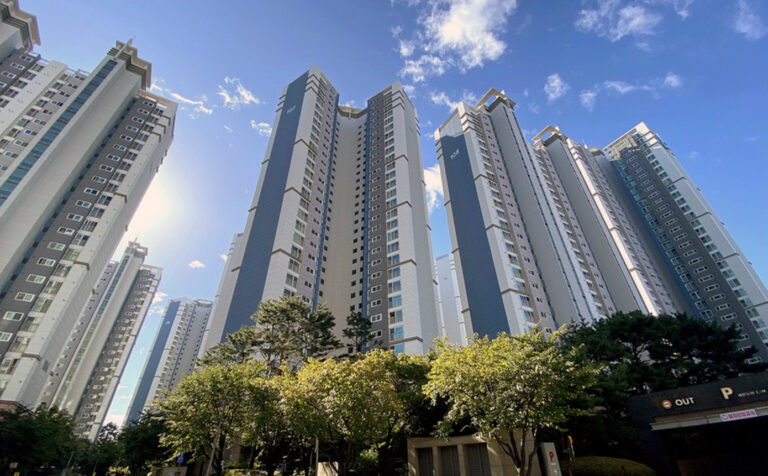
Multi-family housing refers to buildings in which housing units for individual households are connected by shared walls, allowing household members to live together while sharing certain facilities and jointly bearing management and maintenance costs.
Statutory Definition
Under the Building Act, multi-family housing is subdivided into apartments, row houses, multi-family houses, and dormitories. In addition, facilities taking the form of multi-family housing, such as home-based childcare centers, group living homes, community child centers, shared childcare centers, small libraries, and senior well-being facilities, as well as small-sized housing prescribed under Article 10(1)1 of the 'Enforcement Decree of the Housing Act', are also classified as multi-family housing.
Lobin Commentary

Annex 1 of the ‘Enforcement Decree of the Building Act’ further classifies housing types as follows:

  1. Apartments: Housing buildings with five or more stories used for residential purposes.
  2. Row houses: Housing buildings with a total floor area exceeding 660 square meters per building (where two or more buildings are connected by an underground parking structure, each building is considered separately) and with four stories or fewer.
  3. Multi-family houses: Housing buildings with a total floor area of 660 square meters or less per building and with four stories or fewer (where two or more buildings are connected by an underground parking structure, each building is considered separately).
  4. Dormitories: Buildings that fall under any of the following categories and that meet standards regarding spatial configuration and scale as prescribed and publicly announced by the Minister of Land, Infrastructure and Transport. Individually owned units are excluded.
    1. General dormitories: Facilities used for students or employees of schools, factories, or similar institutions, where households using shared cooking facilities account for at least 50 percent of the total number of households (or, where only part of a building is used as a dormitory, 50 percent of the households using that dormitory). This includes student welfare housing under Article 27(2) of the ‘Framework Act on Education’.
    2. Leased dormitories: Facilities used for rental business purposes by a public housing provider under Article 4 of the ‘Special Act on Public Housing’ or by a rental business operator under Article 2(7) of the ‘Special Act on Private Rental Housing’, where at least 20 rooms are provided for rental purposes and households using shared cooking facilities account for at least 50 percent of the total households.

In addition, home-based childcare centers, group living homes, community child centers, shared childcare centers, small libraries, and senior well-being facilities (excluding senior well-being housing), as well as small-sized housing prescribed under Article 10(1)1 of the ‘Enforcement Decree of the Housing Act’, that take the form of multi-family housing are also included within the category of multi-family housing.
Scroll to Top
Step 1 of 2

Access Request for Data Dashboard 2024

Data Dashboard 2024 provides detailed data for 17 metro markets by establishment type, visualized through Microsoft Power BI.

※ You can use Data Dashboard without extra charges before expiration of the existing access period, if 2025 data is updated during the access period.

Data Source

  • GDP: GDP, Current $US (World Bank Open Data)
  • Establishments: Compendium of Tourism Statistics (UNWTO), Lodging Business Ledger (MOIS)
  • Rooms: Compendium of Tourism Statistics (UNWTO), Lodging Business Ledger (MOIS)
  • Lodging GDP: Value Added by Industry (BEA), National Accounts (Cabinet Office), GDP of Indonesia (BPS), GDP & GNI by Sector (BOK), Economic Census (KOSIS)
  • Period: 2017-2021

※ In Korea, general & residential accommodations are included while rural & urban minbaks are excluded. Comparable countries are selected based upon availability of lodging GDP statistics for all types of accommodations.

Data Source

  • Population: Population, Total (World Bank Open Data)
  • GDP: GDP, Current $US (World Bank Open Data)
  • Rooms: Compendium of Tourism Statistics (UNWTO), Lodging Business Ledger (MOIS)
  • Lodging GDP: Value Added by Industry (BEA), National Accounts (Cabinet Office), GDP of Indonesia (BPS), GDP & GNI by Sector (BOK), Economic Census (KOSIS)
  • Period: 2017-2021

※ In Korea, general & residential accommodations are included while rural & urban minbaks are excluded. Comparable countries are selected based upon availability of lodging GDP statistics for all types of accommodations.

Coming soon! We're still in process.

1:1 Contact

※ Messages intended for defamation or obstruction of business by Lobin Co. and /or other third parties, or containing content that is obscene, violent or unrelated to Lobin Co.’s business, will automatically be blocked by the system and not delivered to the administrator.

Data Source

  • Korea: Lodging Business Ledger (MOIS), Tourist Accommodation Ledger (MCST)
  • USA: Census Database (STR)
  • Period: As at the end of 2021

※ General & residential accommodations other than rural and urban minbaks asre included for Korea. Life cycle was calculated as of December 31, 2021 or actual closure date. If there exists a discrepancy between data sources for an establishment, the discrepancy was settled through an algorithm before use.

Data Source

  • Korea: Lodging Business Ledger (MOIS), Tourist Accommodation Ledger (MCST), Economic Census (KOSIS), Hotel Operating Statistics (KHA), DART (FSS), Trends Report (STR)
  • USA: Compendium of Tourism Statistics (UNWTO), Census Database (STR), Trends Report (STR)
  • Period: 2005-2021

※ General & residential accommodations other than rural and urban minbaks asre included for Korea. Visibility was calculated as the number of establishments for which revenue data is available divided by the total number of establishments. If there exists a discrepancy between data sources for an establishment, the discrepancy was settled through an algorithm before use.

Data Source

  • Guests(Korea): Domestic Traveler Survey (MCST), International Traveler Survey (MCST), Hotel Operating Statistics (KHA)
  • Rooms(Korea): Lodging Business Ledger (MOIS), Tourist Accommodation Ledger (MCST)
  • Guests(USA): Compendium of Tourism Statistics (UNWTO), Trends Report (STR)
  • Rooms(USA): Compendium of Tourism Statistics (UNWTO), Census Database (STR)
  • Period: 2005-2020

※ General & residential accommodations other than rural and urban minbaks asre included for Korea. If there exists a discrepancy between data sources for an establishment, the discrepancy was settled through an algorithm before use.